
English


Views: 0 Author: Site Editor Publish Time: 2026-04-21 Origin: Site


People expect everyday products to stay strong, efficient, and reliable over time. That is why polyester polyol matters in materials built for tough, repeated use. In this article, you will learn its key benefits, common applications, how it compares with polyether polyol, and what to consider before choosing it.
In everyday-use materials, performance is usually judged by what happens after repeated stress, not on day one. That is where polyester polyol stands out. It is often chosen for polyurethane systems that need to stay tough, stable, and reliable in products exposed to wear, contact pressure, chemicals, or heat. Rather than being valued for softness or rebound, it is favored when the end product must keep its shape, resist damage, and hold up in more demanding service conditions.
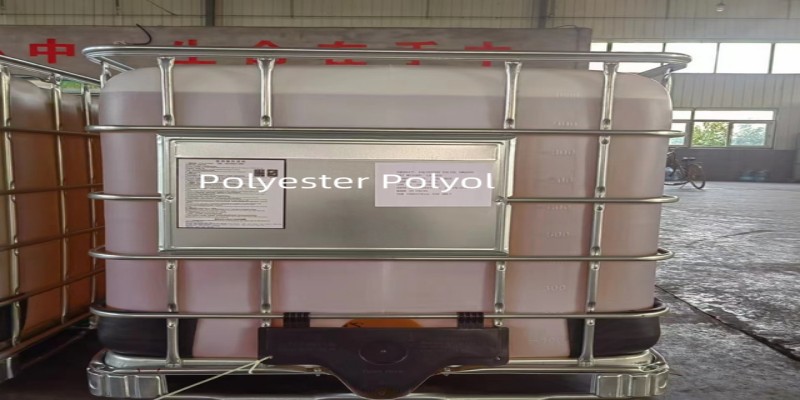
One of the strongest advantages of polyester polyol is the way it supports materials exposed to ongoing friction, pressure, and mechanical strain. In practical terms, this means the finished product is better equipped to resist tearing, deformation, and surface wear during repeated use. That matters in components such as shoe soles, rollers, belts, and other parts that face constant contact and movement. Instead of losing structure quickly, polyester polyol-based systems are valued for maintaining strength and dimensional stability over longer service cycles.
This durability also improves product consistency. A material that keeps its form under repeated loading is easier to trust in applications where performance cannot drop sharply after short-term use. For manufacturers, that translates into fewer failures linked to wear. For end users, it means products that feel more dependable over time rather than gradually weakening under ordinary daily stress.
Another reason polyester polyol performs well in everyday-use products is its resistance to oils, grease, fuels, and many nonpolar solvents. This gives it an advantage in environments where contact with harsh substances is part of normal use rather than an exception. In coatings, adhesives, elastomers, and protective materials, that resistance helps the final product avoid premature breakdown caused by chemical exposure.
A few practical situations where this matters include:
● surfaces exposed to grease or cleaning agents
● bonded layers used around industrial or automotive fluids
● protective materials that need to retain integrity after repeated chemical contact
● components expected to perform in mixed mechanical and chemical environments
Because resistance performance is built into the material choice, polyester polyol helps reduce the risk of softening, swelling, or loss of function when the application faces chemically aggressive conditions.
Thermal stability is another practical strength. Polyester polyol is often selected when a material must maintain structure and function under elevated temperatures or changing thermal conditions. This is particularly relevant in rigid insulation, protective coatings, and durable elastomer systems, where heat exposure can reduce performance if the polymer backbone is not stable enough.
Performance area | Why it matters in everyday use |
Wear durability | Helps products withstand repeated friction and pressure |
Chemical resistance | Supports reliability around oils, solvents, and harsh agents |
Thermal stability | Maintains integrity in warm or temperature-variable conditions |
This heat-related reliability should not be treated as a secondary technical detail. In many daily-use products, thermal stress affects lifespan just as much as abrasion or chemical exposure. A material that stays structurally sound across those conditions is often the difference between short-term function and long-term performance.
Many people never notice where polyester polyol appears, yet it is closely connected to products used at home, at work, and on the move. In practice, it is not limited to one industry or one product format. It shows up in insulation systems, surface protection layers, bonded assemblies, footwear components, and engineered fabrics because manufacturers need materials that support durability and reliable day-to-day function.
Application area | Where people encounter it in daily life |
Insulation systems | Refrigerator walls, insulated panels, building envelopes |
Surface and bonding systems | Protective coatings, sealants, structural or layered bonding |
Wear-intensive components | Shoe soles, industrial contact parts, repeated-use elastomer pieces |
Functional material systems | Coated fabrics, technical textiles, layered performance materials |
One of the most familiar uses of polyester polyol is in rigid polyurethane foam for insulation. This is highly relevant to daily life because insulation is not an abstract industrial feature; it affects how refrigerators stay cold, how buildings manage heat, and how energy-saving systems perform over time. In appliances, polyester polyol helps form foam structures used inside walls and doors, where space efficiency and dependable thermal control matter. In construction-related products, it is used in insulation boards and panel systems designed to reduce energy loss and improve indoor temperature stability.
This application matters because insulation influences both comfort and operating cost. When used in refrigerator insulation or building systems, polyester polyol supports foam materials that fit into thin, enclosed spaces while still contributing to thermal efficiency. The result is something consumers notice indirectly through appliance performance, building comfort, and energy-conscious design.
Polyester polyol is also widely used in coatings, adhesives, and sealants that need to perform in demanding settings. In coatings, it contributes to protective finishes applied to surfaces that must resist everyday contact and maintain a durable outer layer. In adhesives, it helps create bonding systems used to join materials in assembled products. In sealants, it supports long-lasting sealing performance where gaps, joints, or exposed edges need protection from movement and environmental contact.
These applications appear in many built and manufactured environments. A few common contexts include:
● coated household or industrial surfaces
● bonded layered materials used in construction or product assembly
● sealed joints in systems exposed to routine wear or environmental change
Here, polyester polyol is valuable because it works behind the visible surface, helping finishes stay serviceable and bonded structures remain intact through regular use.
Footwear is one of the clearest everyday examples. Polyester polyol is used in polyurethane systems for shoe soles and related components that need to handle repeated ground contact, flexing, and weight-bearing stress. This makes it relevant not just to fashion footwear, but also to work shoes, sport-related designs, and other products where the sole must remain structurally dependable over time.
Beyond footwear, the same application logic extends to durable elastomer parts used in repeated-contact environments. These are components that may not always be visible to end users, yet they are essential in systems that rely on toughness and stable form under ongoing use.
In textile-related applications, polyester polyol is less about ordinary apparel comfort and more about function. It is used in coated fabrics, engineered textile layers, and performance materials designed to do more than provide basic coverage. These materials may be selected for protective use, structural reinforcement, water resistance, or surface treatment compatibility.
That makes polyester polyol relevant to a category of products people encounter without always identifying the chemistry behind them. When fabrics are expected to do real work rather than simply look appealing, polyester polyol helps support the material systems that make those functions possible.
Choosing between polyester polyol and polyether polyol is less about which one is universally better and more about which one matches the demands of the final product. Both are widely used in polyurethane systems, but they support different performance priorities. Polyester polyol is typically favored in applications that demand stronger mechanical performance and better resistance to oils, solvents, and elevated temperatures, while polyether polyol is more often selected where softness, flexibility, or moisture resistance matters most.
Performance factor | Polyester polyol | Polyether polyol |
Mechanical toughness | Higher strength and toughness in demanding use | Better suited to softer, more flexible systems |
Abrasion resistance | Stronger in wear-intensive applications | Usually less preferred for heavy abrasion |
Chemical resistance | Better resistance to oils, grease, fuels, and many solvents | More limited in chemically aggressive settings |
High-temperature performance | Better retention of properties at elevated temperatures | Often less favored when heat resistance is critical |
Hydrolytic stability | More sensitive in wet or humid exposure depending on formulation | Generally stronger resistance to hydrolysis |
Softness and flexibility | Typically chosen less for softness-driven applications | Often preferred for cushioning and flexibility |
When a product must survive demanding service conditions, polyester polyol is often the more suitable choice. Its advantage lies in the kind of performance that shows up under stress: tougher structure, stronger resistance to sliding wear, and better retention of function when exposed to oils, fuels, grease, or solvents. That is why it appears so often in rigid foams, footwear parts, elastomers, coatings, and adhesive systems where the material is expected to keep working rather than simply feel soft.
Its value also becomes clearer when temperature is part of the equation. In applications exposed to heat or fluctuating thermal conditions, polyester polyol is often chosen because the finished material is better able to hold its integrity. This makes it especially relevant for products that must combine structural reliability with environmental resistance, rather than prioritize comfort alone.
Polyether polyol becomes more attractive when the target application depends on softness, resilience, or flexibility. In cushioning systems and comfort-oriented foam applications, that softer performance profile can be more useful than the extra toughness associated with polyester polyol. It is also commonly preferred in environments where hydrolytic stability is especially important, such as applications exposed to moisture or long-term humid conditions.
For that reason, polyether polyol is not a weaker alternative so much as a better match for a different set of priorities. If the product needs comfort, rebound, or stronger resistance to water-related degradation, it may be the more suitable formulation route.
Selecting the right polyester polyol is not just a matter of choosing a familiar material family. Different formulations are designed for different service demands, and the best choice depends on how the final product will actually be used. Polyester polyol appears in applications as varied as rigid insulation, coatings, adhesives, elastomers, and technical materials, each with a different performance target. That means selection should begin with the application itself, not with a generic preference for one chemistry over another.
The first step is to look at the conditions the finished product will face in daily use. A material that performs well in a controlled environment may fail early if it is exposed to sliding wear, chemical contact, or repeated load. Polyester polyol is often chosen because it can support demanding conditions, but that advantage only matters when the formulation matches the real environment of use.
Service factor | What to evaluate before selecting a polyester polyol |
Abrasion | Whether the surface or part will face repeated friction, sliding, or contact wear |
Heat | Whether the product must maintain structure at elevated or changing temperatures |
Oils and solvents | Whether exposure to grease, fuels, or aggressive cleaning agents is expected |
Mechanical load | Whether the part must resist pressure, deformation, or repeated stress cycles |
This type of assessment helps narrow the field quickly. For example, a polyester polyol chosen for insulation foam does not need the same balance of properties as one used in a shoe sole or adhesive layer. Matching the chemistry to the environment is more important than selecting the highest-performing option on paper.
After the service environment is clear, the next question is what the product is primarily supposed to do. Some applications need thermal insulation, some need surface protection, some depend on bond integrity, and others must survive long-term wear. A good selection process prioritizes the main function first and treats all other properties as supporting factors.
In practice, this means asking questions such as:
● Does the application need rigid thermal efficiency or flexible durability?
● Is strong adhesion more important than surface hardness?
● Will the product be judged mainly by sealing performance, abrasion resistance, or structural stability?
This approach prevents overengineering and helps avoid choosing a polyester polyol grade that performs well in one area but adds unnecessary cost or complexity in another.
Cost matters, but the lowest initial material cost is not always the best decision. A polyester polyol that improves service life, reduces maintenance, or lowers replacement frequency may create better value over time than a cheaper alternative. This is especially relevant in insulation systems, bonded assemblies, and wear-intensive parts, where early failure can lead to higher operational costs than the original material savings. A practical selection process should therefore consider not only purchase price, but also durability, expected lifespan, and the efficiency of the finished application.
Polyester polyol stands out because it supports durability, chemical resistance, thermal stability, and versatile daily-use performance. For products that must stay strong and efficient, it is often a smart material choice. Hengshui Xinfa Polyurethane Materials Co., Ltd. delivers polyester polyol solutions designed for reliable quality, practical value, and application-focused support for long-term product performance.
A: Polyester polyol offers strong abrasion resistance, toughness, and structural stability under repeated mechanical stress.
A: Polyester polyol is widely used in rigid insulation, coatings, adhesives, sealants, footwear, and technical textiles.
A: Polyester polyol is less suitable when softness, flexibility, or hydrolytic stability is the main requirement.

