


Views: 0 Author: Site Editor Publish Time: 2026-03-12 Origin: Site


Many everyday products rely on polyurethane foam. Car seats, mattresses, and furniture cushions all depend on materials that provide both comfort and durability. At the center of these materials are polyols, which react with isocyanates to form flexible polymer structures. Among them, Polymer Polyol plays a key role. By introducing dispersed polymer particles into a polyol base, it improves foam strength, resilience, and load-bearing capacity. In this article, you will learn what Polymer Polyol is, how it is produced, and why it is essential in modern polyurethane foam technology.
A polymer polyol is a modified polyol used in polyurethane systems. It contains finely dispersed polymer particles suspended inside a polyol liquid matrix. These particles act as internal reinforcement structures once the foam forms. The result is stronger and more resilient polyurethane material. Unlike a standard polyol or polyester polyol, polymer polyol performs two roles at once. It participates in the polyurethane reaction while also strengthening the final foam structure. This dual function makes it valuable in high-performance foam applications. Manufacturers rely on polymer polyol when products require strong support and long service life. Automotive seating, office furniture, and high-end mattresses are common examples. These products must handle repeated pressure while maintaining shape and comfort.
The structure of polymer polyol begins with a polyether polyol base. Into this base, manufacturers disperse polymer particles such as styrene-acrylonitrile copolymers. These microscopic particles remain evenly suspended throughout the liquid system. The dispersed particles form a two-phase material. The polyol phase stays reactive with isocyanates during polyurethane production. The polymer particles provide reinforcement inside the resulting foam cells. This structure increases foam stiffness and mechanical strength. In comparison, a polyester polyol contains ester-based molecular chains that influence flexibility and chemical resistance. Polymer polyol focuses more on mechanical reinforcement. Because of this design, it is widely used when manufacturers need stronger cushioning foams.
Polymer polyol typically appears as a milky white or slightly yellow liquid. It has higher viscosity than most conventional polyols because of the suspended polymer particles. Despite its thicker texture, it remains pumpable and stable under controlled conditions. One important characteristic is its active hydroxyl groups. These chemical groups react with isocyanates to form polyurethane networks. At the same time, the dispersed polymer particles reinforce the internal foam structure. This unique combination allows manufacturers to produce stronger foams without dramatically increasing material density. In practical terms, products feel supportive yet comfortable. That is why polymer polyol plays a key role in modern polyurethane foam engineering.
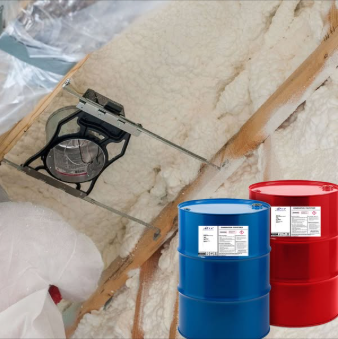
The production of polymer polyol begins with a polyether polyol base. This base provides the liquid medium where polymer particles will form. Manufacturers carefully select monomers and stabilizers to control particle creation and dispersion. The most common monomers used are styrene and acrylonitrile. These compounds polymerize during production to form tiny solid particles. Stabilizers help keep those particles suspended in the liquid polyol phase. While polymer polyol relies on a polyether base, polyurethane formulations may also combine it with polyester polyol materials. This combination allows engineers to fine-tune flexibility, durability, and mechanical performance in foam systems.
Polymer polyol is typically produced through an in-situ polymerization process. In this method, monomers polymerize directly inside the liquid polyol medium. The reaction forms microscopic particles that remain suspended within the material. During the process, initiators trigger polymerization at controlled temperatures. As the reaction progresses, polymer chains grow until they reach a stable size. These particles remain evenly distributed through chemical stabilization mechanisms. This process ensures uniform particle distribution. Uniformity is important because it affects foam consistency and mechanical properties. Stable dispersion helps manufacturers produce polyurethane materials with predictable performance.
Particle stabilization is essential for polymer polyol quality. Without stabilization, polymer particles could clump together or settle during storage. Manufacturers use specialized stabilizers known as macromers to prevent this problem. Macromers attach chemically to growing polymer chains. Their long molecular structures extend into the polyol medium. This creates steric stabilization that prevents particles from sticking together. The result is a stable dispersion that remains uniform even during storage and transportation. This stability ensures the polymer polyol performs consistently during polyurethane foam production.
One of the most important advantages of polymer polyol is its reinforcement capability. The dispersed polymer particles act as microscopic structural supports within the foam. They strengthen the internal cell walls of polyurethane foam.
Because of this structure, foams made with polymer polyol can support higher loads. They resist deformation under repeated compression. Products such as car seats or office chairs benefit greatly from this property.
Compared with conventional polyols like polyester polyol, polymer polyol significantly increases load-bearing capacity. This allows manufacturers to produce durable foams without sacrificing comfort.
Polymer particles influence foam cell formation during polyurethane reactions. They serve as nucleation sites where gas bubbles begin forming. This leads to more uniform foam cells throughout the material. Uniform cells improve mechanical balance within the foam. They distribute pressure evenly and prevent localized collapse. The result is foam that feels stable and supportive during use. Stable cell structures also improve dimensional stability. Products maintain their shape for longer periods, even under frequent pressure cycles.
Durability and fatigue resistance are key performance indicators for polyurethane foams used in high-load applications. Polymer polyol improves long-term resilience by reinforcing the foam cell structure and increasing compression resistance. The following structured comparison highlights important performance indicators, testing methods, and engineering considerations.
| Technical Dimension | Polymer Polyol Reinforced Foam | Conventional Flexible PU Foam | Typical Test Standard / Notes |
|---|---|---|---|
| Compression Set (50% compression, 70°C, 22 h) | ≤ 10–15 % typical for HR foams | 15–25 % typical | ASTM D3574 Test D |
| Fatigue Durability (80,000 cycles) | Height loss ≤ 5 % | Height loss 8–15 % | ASTM D3574 Test I3 |
| Support Factor (Sag Factor) | 2.5 – 3.0 | 2.0 – 2.4 | ASTM D3574 Test C |
| Compression Modulus | Higher modulus due to SAN particle reinforcement | Lower modulus | Indicates load-bearing capability |
| Resilience (Ball Rebound) | 50–65 % typical HR foam | 35–50 % standard foam | ASTM D3574 Test H |
| Tensile Strength | 120–200 kPa | 80–150 kPa | ASTM D3574 Test E |
| Tear Strength | 2.0–3.5 N/mm | 1.5–2.5 N/mm | ASTM D3574 Test F |
| Typical Foam Density | 30–60 kg/m³ HR flexible foam | 20–45 kg/m³ | Density affects durability |
| Cell Structure | Fine, uniform cells from polymer particle nucleation | Larger and less uniform cells | Affects fatigue resistance |
| Primary Industrial Applications | Automotive seating, office chairs, high-resilience mattresses | Low-load cushions, packaging foams | High-cycle environments benefit most |
| Long-Term Load Resistance | Maintains shape under repeated compression | Gradual loss of support over time | Important for seating products |
| Processing Considerations | Higher viscosity polyol requires efficient mixing | Easier processing | Proper dispersion critical |
| Material Formulation Practice | Often blended with polyether polyol systems | Basic flexible foam formulation | Polymer polyol improves structural reinforcement |
Tip:For automotive seating or commercial furniture foams, polymer polyol grades with 30–45% solid SAN content are commonly selected because they provide a strong balance between load-bearing support, resilience, and long-term fatigue durability.
Foam density strongly influences product weight and material usage. Increasing density usually increases strength but also raises cost and weight. Polymer polyol offers a different solution. The reinforcement particles strengthen foam structures internally. Manufacturers can achieve higher support levels while maintaining moderate density. This improves performance while controlling material consumption. Compared with formulations based only on polyester polyol, polymer polyol systems often deliver stronger foams at similar densities.
Flexible polyurethane foams must provide both softness and structural support to ensure long-term comfort. Polymer polyol improves the foam’s support factor, often reaching 2.5–3.0 in high-resilience foams, which helps distribute body weight more evenly across the cushion surface. This balanced structure prevents excessive sinking while maintaining a comfortable seating or sleeping experience. In mattress and seating systems, polymer polyol is commonly blended with polyester polyol or polyether polyol to fine-tune resilience, elasticity, and compression resistance, allowing engineers to design foams optimized for ergonomic comfort and long-term durability.
Polymer polyol contributes to stable foam processing by promoting controlled nucleation during the polyurethane foaming reaction. The dispersed polymer particles act as nucleation sites, helping generate more uniform cell structures and reducing irregular bubble formation. This leads to improved foam consistency, especially in continuous slabstock and molded foam production lines. Stable formulations help manufacturers maintain predictable foam density, hardness, and resilience across large production volumes. As a result, production efficiency increases while material waste and off-specification products are significantly reduced in industrial polyurethane manufacturing.
Automotive seating requires materials that remain comfortable over many years of use. Polymer polyol enables polyurethane foams to maintain shape and support under repeated pressure. Car seats, armrests, and interior cushions frequently rely on polymer polyol formulations. The reinforced foam structures improve fatigue resistance and comfort performance. These properties help automotive manufacturers meet durability standards and long-term performance expectations.
In furniture and mattress manufacturing, polymer polyol is widely used to produce high-resilience (HR) flexible polyurethane foam. These foams typically exhibit resilience values above 50% ball rebound and densities ranging from 30–55 kg/m³. Polymer polyol strengthens the foam cell network, allowing cushions to recover quickly after compression and maintain consistent support. This is particularly important for sofas, office chairs, and mattresses that experience continuous daily use. By improving load distribution and structural durability, polymer polyol helps extend the functional life of upholstered furniture products.
Polymer polyol is also used in molded polyurethane systems where dimensional stability and structural strength are critical. Molded foams for steering wheels, armrests, and protective components often require controlled density and uniform cell morphology to maintain surface quality and mechanical durability. The dispersed polymer particles in polymer polyol improve structural reinforcement and reduce deformation under repeated stress. These characteristics support precise mold replication and long-term product stability in automotive interiors, industrial protective components, and semi-rigid polyurethane parts.
Solid content represents the percentage of dispersed polymer particles in polymer polyol, typically ranging from 10% to 50% by weight. Increasing solid content generally improves foam hardness, compression modulus, and load-bearing capacity because the particles reinforce the foam cell walls. However, higher solid levels also raise viscosity and may affect foam flow during processing. In high-resilience flexible foam production, grades containing 30–45% solids are commonly used to achieve a balance between structural support, foam stability, and manufacturability.
The hydroxyl number measures the concentration of reactive hydroxyl groups in a polyol. This value determines how the polyol reacts with isocyanates during polyurethane formation. Higher hydroxyl numbers often produce more crosslinked foam structures. Lower values may produce softer materials. Engineers adjust this parameter to control foam flexibility. Both polymer polyol and polyester polyol formulations rely on hydroxyl value control to achieve desired material performance.
Polymer polyol typically has higher viscosity than standard polyols. The suspended polymer particles increase resistance to flow. Processing equipment must handle this viscosity during pumping and mixing operations. Temperature control and proper mixing help maintain consistent material behavior. Despite higher viscosity, polymer polyol remains widely used because of the performance advantages it brings to polyurethane foams.
In polyurethane systems, polymer polyol and polyester polyol play different but complementary roles. Polymer polyol mainly improves foam reinforcement and load-bearing performance, while polyester polyol provides chemical resistance and mechanical stability through its ester bond structure. The following comparison organizes their differences across structure, technical parameters, applications, and processing considerations.
| Comparison Dimension | Polymer Polyol | Polyester Polyol |
|---|---|---|
| Basic Chemical Structure | Polyether polyol base containing dispersed polymer particles (typically SAN: styrene-acrylonitrile copolymer) | Polyester backbone formed by condensation of diacids (e.g., adipic acid) and diols (e.g., ethylene glycol) |
| Polymer Solid Content | Typically 10–50 wt% solids (common industrial grades 20–45%) | 0 wt% solids (homogeneous liquid phase) |
| Hydroxyl Number | Typically 20–60 mg KOH/g for flexible foam grades | Typically 30–80 mg KOH/g, depending on formulation |
| Viscosity (25 °C) | Higher viscosity, approx. 2,000–6,000 mPa·s depending on solids | Usually 500–3,000 mPa·s |
| Particle Structure | Two-phase dispersion with particle sizes around 0.1–1 μm | Single-phase liquid without dispersed particles |
| Primary Functional Role | Reinforces foam cell structure and increases load-bearing capacity | Enhances mechanical strength and chemical resistance |
| Effect on Foam Cell Structure | Promotes nucleation sites and improves cell uniformity | Limited direct influence on foam cell nucleation |
| Compression Load Capacity | Significantly improves compression support in foam systems | Moderate improvement through inherent polymer rigidity |
| Resilience Performance | Excellent resilience, widely used in HR (High-Resilience) foams | Moderate resilience depending on formulation |
| Chemical Resistance | Moderate resistance to solvents and oils | Strong resistance to oils, solvents, and hydrolysis |
| Thermal Stability | Good thermal performance | Often higher thermal and chemical stability |
| Typical Foam Density Range | HR foam density typically 30–60 kg/m³ | Used across elastomers, coatings, and some foams |
| Processing Characteristics | Higher viscosity requires efficient mixing and pumping | Lower viscosity improves processing flow |
| Storage Stability | Requires stabilizers to maintain particle dispersion | Generally stable under standard storage conditions |
| Processing Considerations | Continuous mixing recommended to prevent particle sedimentation | Moisture control is important to prevent hydrolysis |
| Compatibility with Other Polyols | Frequently blended with polyether polyol or polyester polyol | Compatible with polyether polyol and polymer polyol systems |
| Common Industrial Standards | Hydroxyl number measured by ASTM D4274 | Hydroxyl value and acid number often tested by ASTM D4274 / ASTM D2849 |
| Typical Industrial Applications | Automotive seating, HR furniture foam, molded cushions | Adhesives, coatings, elastomers, high-strength polyurethane materials |
Tip:In high-performance polyurethane formulations, engineers often combine polymer polyol and polyester polyol to balance foam reinforcement, durability, and chemical resistance in demanding applications such as automotive seating and industrial cushioning.
Polymer polyol and polyester polyol serve different technical purposes in polyurethane formulation. Polymer polyol contains dispersed SAN polymer particles that improve foam load-bearing capacity and compression resistance, making it essential for high-resilience flexible foams such as automotive seating and premium furniture cushions. Polyester polyol, built from ester linkages, provides strong intermolecular bonding that enhances tensile strength, heat resistance, and chemical stability. In industrial formulations, engineers often blend both materials to balance mechanical reinforcement, durability, and processing performance in polyurethane foam systems.
Manufacturers select polymer polyol because it enables stronger foam structures without significantly increasing density. The dispersed polymer particles act as internal reinforcement points that improve compression modulus, fatigue resistance, and shape recovery under repeated loading. This makes polymer polyol especially valuable for products exposed to long-term mechanical stress, such as seating systems and high-resilience cushions. In large-scale production, polymer polyol also helps stabilize foam cell formation, supporting consistent foam structure and reliable product performance across continuous manufacturing processes.
Polymer Polyol improves foam strength, resilience, and durability in polyurethane materials. It helps create comfortable, long-lasting products used in automotive seating, furniture, and bedding. Hengshui Xinfa Polyurethane Materials Co., Ltd. supplies high-quality polymer polyol materials that support stable processing, consistent foam structure, and reliable performance for modern polyurethane manufacturing.
A: A Polymer Polyol is a modified polyol containing dispersed polymer particles used to improve polyurethane foam strength and durability.
A: Polymer Polyol increases load-bearing capacity, resilience, and structural stability in flexible polyurethane foams.
A: Polymer Polyol is made through in-situ polymerization where monomers form polymer particles inside a polyol base.
A: Polymer Polyol is widely used in automotive seats, mattresses, furniture cushions, and molded polyurethane parts.
A: Polymer Polyol reinforces foam structure, while polyester polyol mainly improves chemical resistance and mechanical strength.


